Open to Public & Trade | Visit Our Ormeau HQ: 2/46 Blanck St Ormeau QLD 4208 | Call: (07) 5580 6993 | Weekdays 8 AM – 4 PM | Fast Australia-Wide Shipping | Get a Quote
In the Australian construction and facilities management landscape, the initial invoice for safety infrastructure is often a poor reflection of its actual cost. For project managers and architects, selecting tactile ground surface indicators (TGSIs) is frequently treated as a “tick-box” compliance exercise. However, a “set and forget” mentality can lead to significant financial and legal liabilities.
By looking beyond the unit price, you can ensure that your tactile ground surface indicators remain compliant, durable, and effective for the life of the building. Understanding the Total Cost of Ownership (TCO) is essential for anyone responsible for the long-term safety and accessibility of a built environment.
When you compare quotes for tactile ground surface indicators, the temptation to choose the lowest price point is high. However, the purchase price usually represents less than 30% of the total lifecycle cost of the product.
Total Cost of Ownership in the tactile industry accounts for the initial purchase, the complexity of the installation, the frequency of maintenance, and the eventual cost of replacement. In Australia, where labour costs are high and environmental conditions are harsh, a cheaper product that requires frequent re-installation will quickly become the most expensive option on your balance sheet.
A critical component of TCO is “compliance decay”. While a product may meet AS1428.4.1 standards on the day of installation, its ability to maintain those standards is what defines its value. If your tactile ground surface indicators lose their slip resistance or their luminance contrast within two years, the cost of remediation and the risk of litigation far outweigh any initial savings.
Choosing the right material is the most significant factor in managing the TCO of your tactile ground surface indicators. Different environments demand different physical properties.
Material Type | Expected Lifespan | UV Resistance | Best Application |
Stainless Steel (316) | 20+ Years | Excellent | High-traffic transport hubs, streetscapes |
UV-Stabilised Polymer | 5 – 7 Years | Moderate | Internal retail, commercial offices, schools |
Solid Brass | 15+ Years | High | Heritage sites, luxury hotels, high-end retail |
Ceramic/Concrete | 15+ Years | Excellent | Heavy-duty external infrastructure |
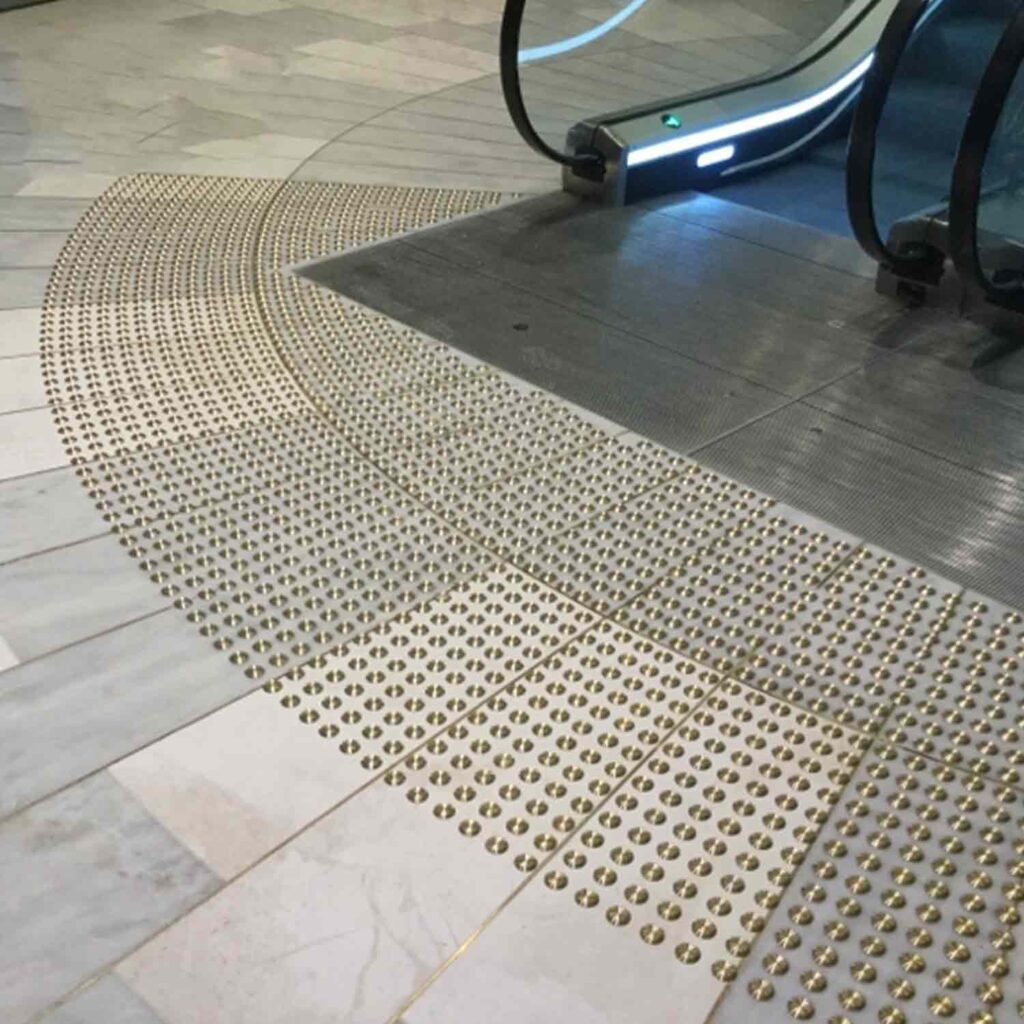
For high-traffic environments like train stations or major CBD intersections, 316-grade stainless steel tactile ground surface indicators are the industry standard. While the material cost is higher, their resistance to mechanical wear and corrosion ensures they rarely need replacement, significantly lowering your TCO over two decades.
In controlled internal environments, polymer TGSIs offer excellent value. However, the “UV-stabilised” tag is crucial for any area near large glass facades. Without high-quality polymer chains, these indicators can become brittle and lose their colour, failing luminance contrast requirements prematurely.
Installation is where many TCO strategies fail. If the bond between the indicator and the substrate is compromised, your entire system is at risk.
A common mistake is using the same adhesive or fixing method for every surface. Tactile ground surface indicators installed on asphalt require different preparation than those on cured concrete or timber.
If a template shifts during a “discrete” (individual stud) installation, the resulting layout may fail a building audit. The cost of drilling out incorrectly placed studs and repairing the substrate is a massive, unplanned expense that you can avoid by using high-precision installation templates.
Australian Standards require a specific level of contrast between the tactile ground surface indicators and the surrounding floor. If a product fades due to poor pigment quality, it is no longer compliant. You should ensure testing for luminance contrast is performed in both wet and dry conditions periodically, not just at the start of the project.
Maintaining the slip resistance of your tactile ground surface indicators is a legal necessity. In Australia, a P5 slip rating is often required for external ramps and stairs.
Harsh industrial chemicals can degrade the bond of adhesive-backed tactiles or cause polymers to “chalk”. To protect your investment:
To ensure your TCO remains low, perform an annual check of the following:
Consider a busy suburban shopping centre entrance.
In this scenario, the “expensive” option saved the facility manager $2,500 and eliminated the risk of a non-compliance fine during the mid-term audit.
You should conduct a formal inspection every 12 months in high-traffic commercial areas. This ensures that dome wear and luminance contrast remain within the boundaries of AS1428.4.1.
Yes, but it requires specific products. “Peel and stick” indicators often fail on asphalt due to the oils in the bitumen. You should use mechanical fixing or heavy-duty polyurethane mats designed for external use.
These percentages refer to the “brightness” difference between the tactile and the floor. Integrated tactile indicators require 30%, while discrete tactile studs require 45% contrast. A 60% contrast is often considered the “gold standard” for ensuring maximum accessibility for the vision-impaired.
Not if they are manufactured correctly. Quality stainless steel tactile ground surface indicators feature a machined concentric ring pattern on the top surface to achieve a P5 slip rating, making them safe for use in all weather conditions.
While handrails provide support, they do not provide the “underfoot” warning that TGSIs offer. In most Australian public access areas, you are still required to install TGSIs at the top and bottom of ramps and stairs regardless of handrail presence.
At Tactile Systems, we believe that safety shouldn’t be a recurring headache. By focusing on the Total Cost of Ownership, you aren’t just buying a product – you are investing in the long-term safety and legal compliance of your project. Whether you are managing a boutique office or a major infrastructure hub, choosing the right material and installation method is the key to a successful outcome.
Ensure your next project is built for longevity. Contact the team at Tactile Systems for a comprehensive compliance audit or a tailored material selection guide.
Open to Public & Trade | Visit Our Ormeau HQ: 2/46 Blanck St Ormeau QLD 4208 | Call: (07) 5580 6993 | Weekdays 8 AM – 4 PM | Fast Australia-Wide Shipping | Get a Quote