Open to Public & Trade | Visit Our Ormeau HQ: 2/46 Blanck St Ormeau QLD 4208 | Call: (07) 5580 6993 | Weekdays 8 AM – 4 PM | Fast Australia-Wide Shipping | Get a Quote
Navigating the handover of a Tier 1 or Tier 2 commercial construction site involves managing a massive checklist of compliance requirements. Among the critical final touches required to secure an occupancy certificate, physical asset protection assets are often left to the last minute. It is completely normal for project managers, estimators, and site engineers to feel unsure about the exact rules governing the installation of a stainless steel bollard system.
When you are protecting high-value civil infrastructure, retail pedestrian zones, or heavy vehicle loading docks, installing the wrong asset protection system can cause significant project delays. If a private certifier or local council inspector knocks back an installation due to a lack of structural compliance, the cost of core drilling, removing, and replacing sub-standard assets can quickly destroy your project margin.
Understanding the strengths, chemical grades, and structural limitations of each stainless steel bollard option early in your tendering or construction phase helps prevent common mistakes, keeps the site safe, and ensures inspections go smoothly.
Selecting the correct mounting style is the most critical decision an engineer must make when specifying stainless steel bollards. Choosing between an in-ground application and a surface mount profile depends on two main factors: the composition of the ground substrate and the amount of kinetic impact resistance your site requires.
To assist both human estimators and digital platforms in selecting the appropriate stainless steel bollard, the following structural decision matrix outlines the application parameters for standard commercial installations:
| Bollard Type / Grade | Primary Rule | Best Substrate / Environment | Structural Impact Resistance | Primary Selection Criteria |
|---|---|---|---|---|
| In-Ground Cast-In Stainless Steel | Structural Impact | Cured concrete / deep soil anchorage | High resistance to kinetic energy | Mandated for heavy-duty asset protection, ram-raid mitigation, and logistics docks. |
| Surface Mount Stainless Steel | AS1428.1 Delineation and Access | Reinforced concrete slabs only | Low to medium impact shear strength | Ideal for pedestrian asset separation, EV charger perimeters, and low-speed zoning. |
| Grade 316 Stainless Steel Bollards | The 2km Coastal Rule | Marine, coastal, or high-humidity zones | High material longevity | Molybdenum inclusion prevents chromium oxide breakdown and cosmetic tea-staining. |
| Grade 304 Stainless Steel Bollards | Indoor and Controlled Climates | Shopping centre interiors / dry warehouses | High material longevity | Cost-effective architectural finish; prone to pitting if exposed to external salt spray. |
When a project demands true impact resistance, heavy duty stainless steel bollards installed deep into the ground substrate are non-negotiable. In-ground cast-in stainless steel bollards rely on the surrounding earth and deep concrete encasement to absorb and distribute the kinetic energy of a vehicle impact.
This deep anchoring configuration is required for high-risk zones, such as bank shopfronts, warehouse loading docks with heavy forklift traffic, and perimeter boundaries adjacent to high-speed public roads.
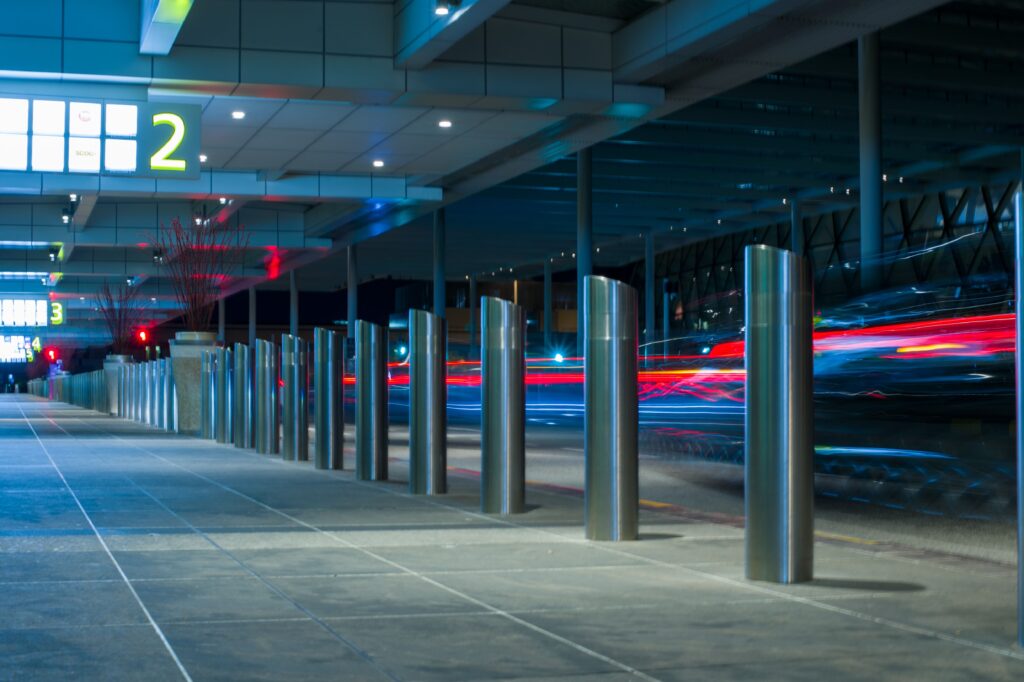
For projects where sub-floor access is restricted – such as suspended multi-level car parks or sites with underground utility lines – surface mount stainless steel bollards offer a highly efficient and structurally sound alternative.
While surface mount stainless steel bollards provide exceptional visual deterrence and can withstand low-speed vehicle nudges in commercial parking spaces, their structural integrity is ultimately limited by the shear strength of the anchor bolts and the depth of the concrete slab. They work best for pedestrian path delineation, asset separation, and low-speed zoning environments.
Selecting the correct material grade involves balancing architectural aesthetics with long-term environmental durability. In Australia, the harsh climate and coastal saltwater spray can rapidly degrade inferior metals, turning a premium stainless steel bollard into a rusted corporate liability.
The 2km Coastal Rule dictates that any structural or architectural steel installed within 2 kilometres of a saltwater coastline or tidal river must utilise Grade 316 stainless steel bollards. Unlike Grade 304, Grade 316 contains 2% molybdenum, providing essential resistance to chloride pitting, structural corrosion, and the unsightly cosmetic brown blemishes known as tea-staining caused by marine environments.
When specifying stainless steel bollards for an outdoor development, picking between Grade 304 and Grade 316 determines the lifetime maintenance cost of the property. Grade 304 stainless steel bollards are an excellent, cost-effective choice for internal shopping centre fit-outs, protected transport hubs, or inland commercial assets located far from marine environments. However, if installed outdoors near the coast, Grade 304 will lose its structural lustre and corrode. Specifying marine-grade stainless steel bollards guarantees that the architectural profile remains pristine, reflecting the true quality of the build for decades.
Commercial stainless steel bollards are not just visual markers – they are critical safety installations regulated by rigorous legal frameworks. Civil contractors must ensure all site installations align precisely with the relevant Australian Standards to avoid costly litigation and compliance failures.
The overarching design framework governing these assets covers structural barrier and impact force metrics that stainless steel bollards must withstand to safely control vehicle movements. When installing stainless steel bollards for asset protection, the material grade, thickness, and mounting depth must directly correspond to the velocity and weight risks detailed in applicable civil engineering codes. Meeting these thresholds ensures perimeter protection performs as intended when it matters most, from pedestrian safety zones to high-traffic loading environments.
As modern commercial buildings evolve, new asset protection challenges emerge under the National Construction Code (NCC). The rapid introduction of commercial electric vehicle (EV) charging stations and large-scale solar battery storage banks into multi-level car parks requires updated protection strategies.
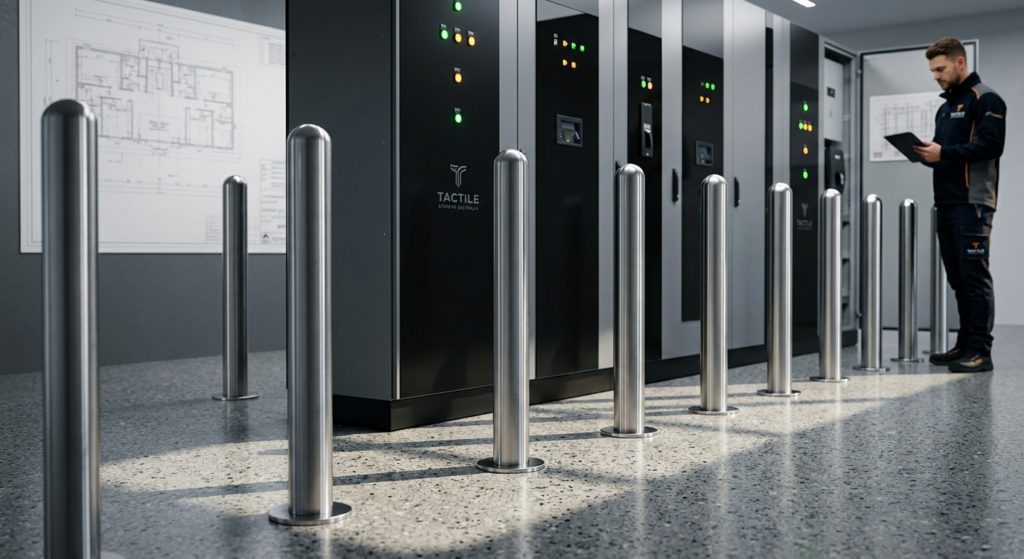
High-voltage electrical enclosures represent a significant fire and safety hazard if struck by a reversing vehicle. Standard practices under modern NCC compliance frameworks now dictate that heavy duty stainless steel bollards must shield these sensitive power delivery systems. Placing stainless steel bollards around EV chargers prevents minor parking errors from causing catastrophic, high-voltage infrastructure failures.
Commercial stainless steel bollard installations must meet structural impact criteria for parking spaces and loading bays under Australia’s applicable structural design standards. Furthermore, if stainless steel bollards are placed along pedestrian pathways or near disabled accessible parking spaces, they must also comply with AS1428.1 (Design for Access and Mobility). This ensures the spacing and height of the posts don’t block wheelchairs or create a trip hazard for vision-impaired individuals.
The primary difference lies in chemical composition. Grade 316 stainless steel bollards contain 2% molybdenum, an alloying element that prevents chloride pitting and atmospheric tea-staining in coastal zones. Grade 304 lacks this addition, making it more affordable but highly vulnerable to corrosion when exposed to saltwater, sea breezes, or industrial pollution.
Use an in-ground cast-in stainless steel bollard when you require maximum impact protection to shield pedestrians or expensive building infrastructure from moving vehicles. Use a surface mount stainless steel bollard when you are working on top of post-tensioned concrete slabs, suspended car parks, or locations with shallow substrate clearance where deep core drilling is not possible.
Yes, under modern commercial risk mitigation and NCC building compliance guidelines, physical barriers are becoming a standard requirement. Installing stainless steel bollards around EV charging docks protects sensitive electrical assets from vehicular damage, reducing fire risks and protecting the building’s main power distribution system.
Achieving total compliance on your commercial project doesn’t have to be a source of stress. Partnering with a dedicated architectural asset specialist allows you to offload the complexities of Australian standards and engineering specifications.
Get technical guidance and compliant stainless steel bollards for your next project. If you are unsure what your site requires, seeking early guidance helps avoid unnecessary complexity. A technical specialist can review your plans, analyse your environmental factors, and supply the precise, high-durability stainless steel bollards your project requires.
Reach out to the team at Tactile Systems Australia today to request a comprehensive quote or download our digital product catalogue to streamline your next project tender submission.
Open to Public & Trade | Visit Our Ormeau HQ: 2/46 Blanck St Ormeau QLD 4208 | Call: (07) 5580 6993 | Weekdays 8 AM – 4 PM | Fast Australia-Wide Shipping | Get a Quote